MiniatureBuildings.co.uk : Exploring model buildings of all sizes and styles
- Aims&Scope(top)
- Home
-
About
Us -
Recent
Articles -
Scales &
Uses - Modelling
-
All
Articles
Miniature Buildings
(top of page)
Home
Articles
- Miniature
Buildings - Home +
-
Recent
Blogs -
All
Articles
.
Miniature Buildings
Some thoughts on building models of all types and sizes
Some thoughts on building models of all types and sizes
Welcome. If you have not visited Minature Buildings before can I suggest you begin with my Aims and Scope article or at the Home Page. If you have visited before - welcome back. I hope this article is of interest to you.
The aims and scope of
'Miniature Buildings'
Is this the site for you? I hope so. A website without a body of readers and contributors would all be a bit pointless. Even the least astute reader will have guessed that Miniature Buildings is about models of buildings. In all their various forms. Looking at them, enjoying them, collecting them and producing them. It attempts to find common ground between the wide variety of models produced in the various different scales for multiple purposes.
Some model or miniature buildings are produced, singly or within dioramas, just for their own sake. As a display piece or work of art to stand on its own merits on a plinth, in a cabinet or in a reception area or on a sideboard or bookshelf. Something which we naturally applaud.

A standalone Gibson model
But this is a minority. Most model buildings are created and exist within one of at least fourteen discreet environments. Sometimes simply as models, sometimes serving some other purpose:
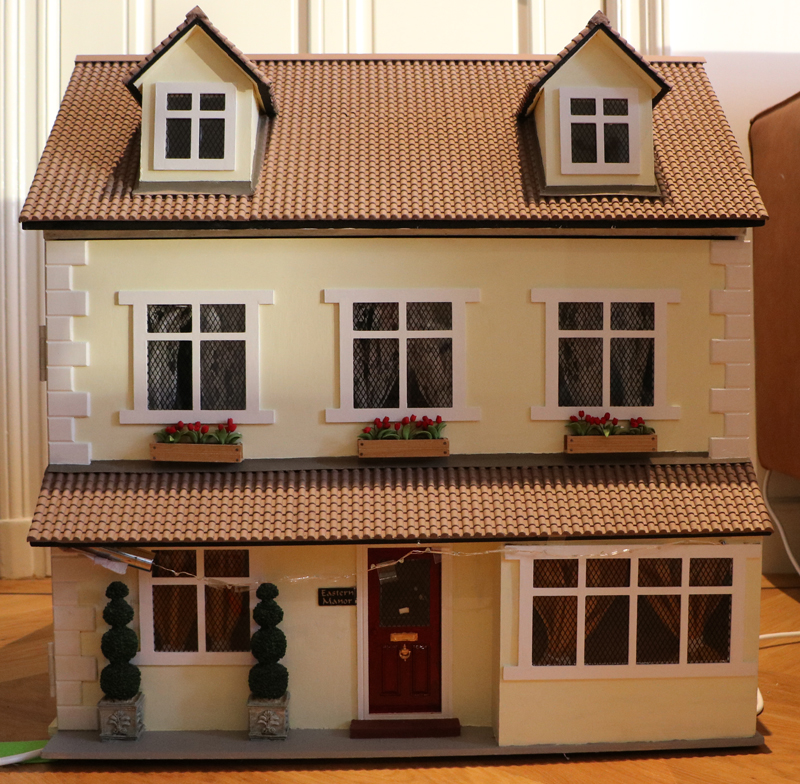
As dolls houses. This is a simple one, as restored by me.
For more on fancier examples of the genre see MBdollhouse

In outdoor model villages or miniature parks
Such as Madurodamin Holland or Cockington Gardens in Australia.
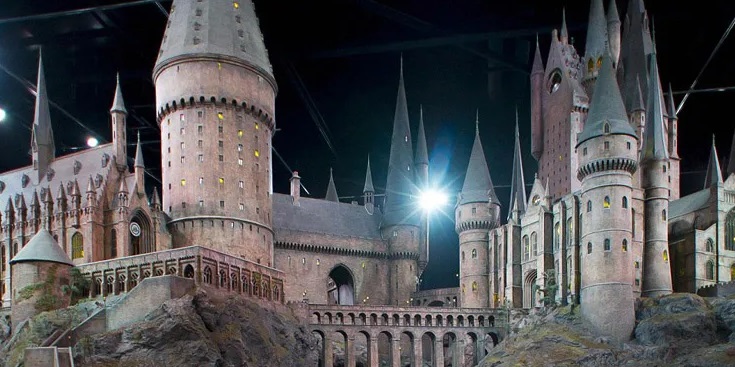
For use as film sets
Part of the Hogwarts model used for the Harry Potter Films
There is an interesting online review of this subject in PC magazine
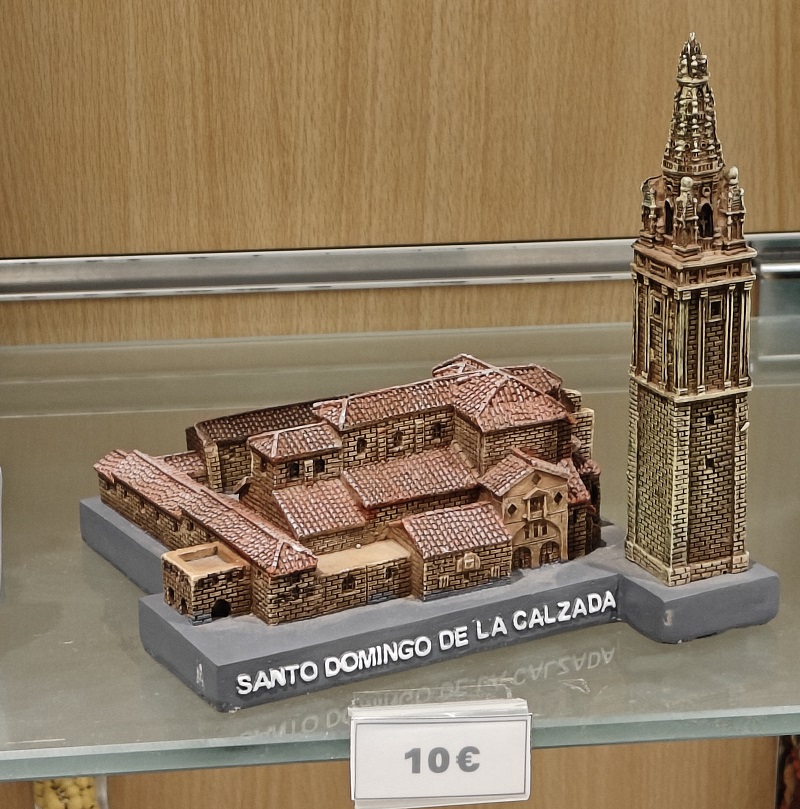
Sold as souvenirs
For more on models of this church see MBchurchSantaDomingo
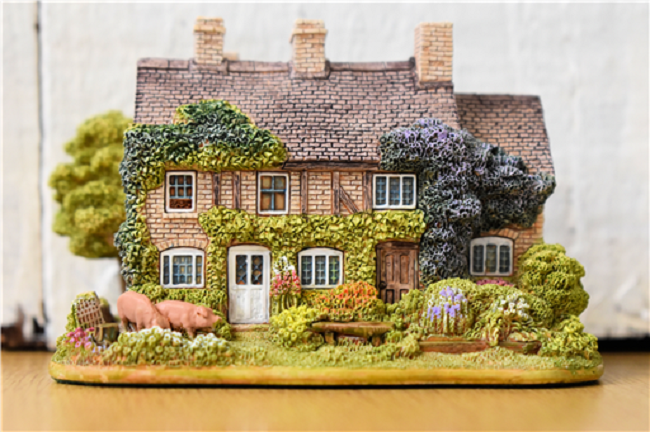
Giftware for collectors. This is Lilliput Lane's Fordhall farmhouse.
Another collectible producer is Philip Laureston.
For other farm models take a look at MBfarm

Within larger sculptures
I have done a whole article on saints with buildings
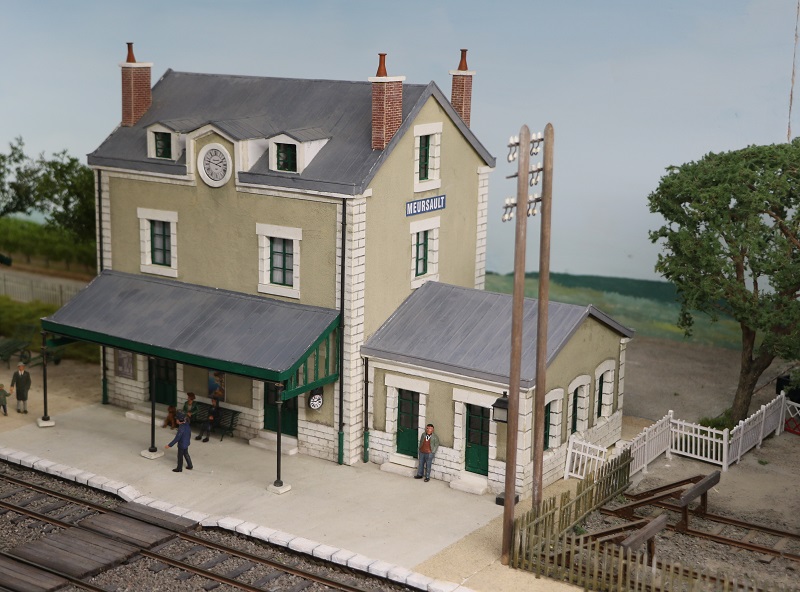
On model railway layouts
There is a little bit on this subject in an article by me but I have little to add to the dozens of sites and groups dedicated to the subject.
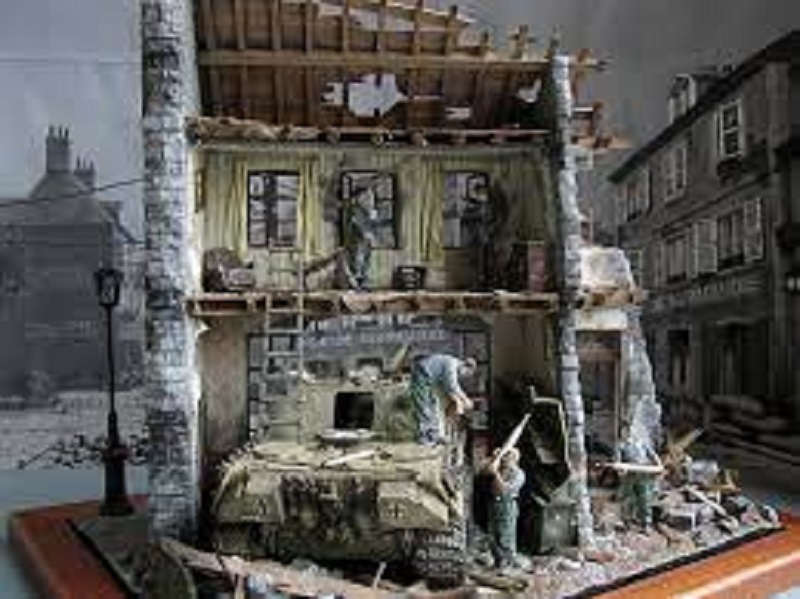
Scenery for military modelling and wargaming - often in ruins
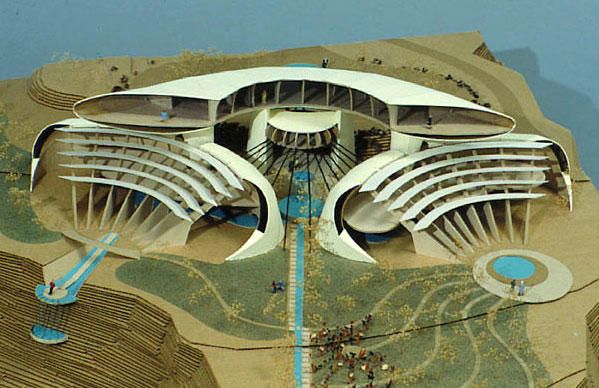
Professional Architectural modelling
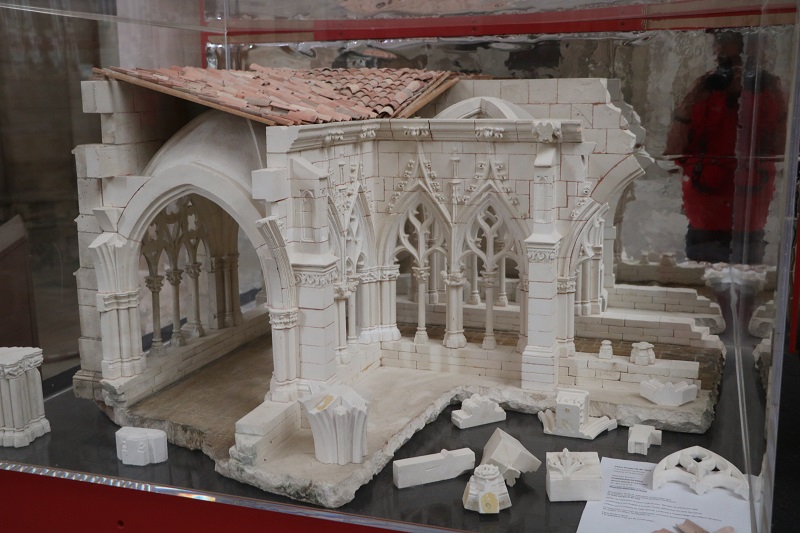
Scenic models displayed in museums, cathedrals, stately homes etc
This image comes from an article aboutCathedraloscope in Brittany
but there are plenty of other examples scattered around Miniature Buildings
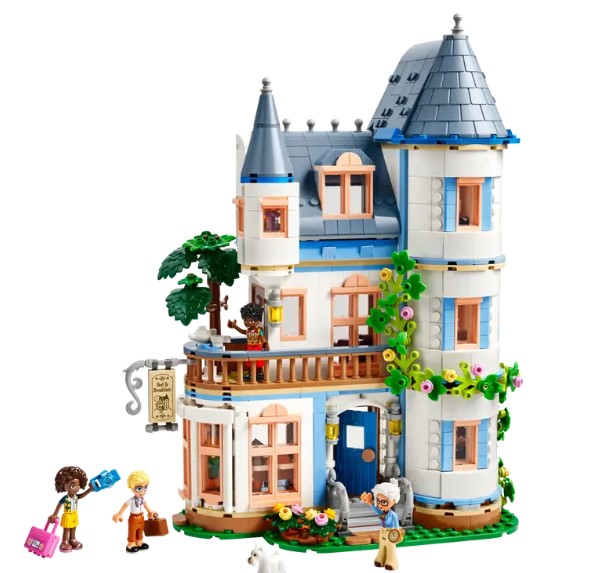
Toys - Lego of course
As 'House Portraits'
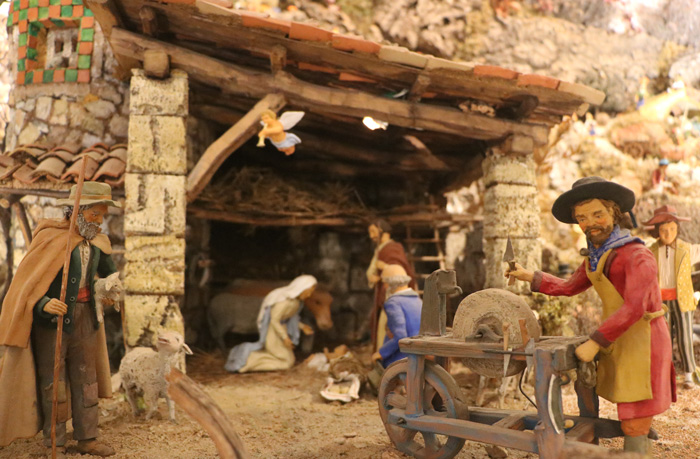
Within Nativities and Christmas villages
There is more on this topic in Santons and in Ferme Presepe
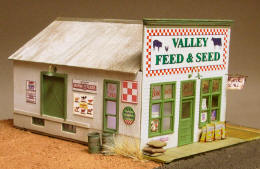
As advertising props
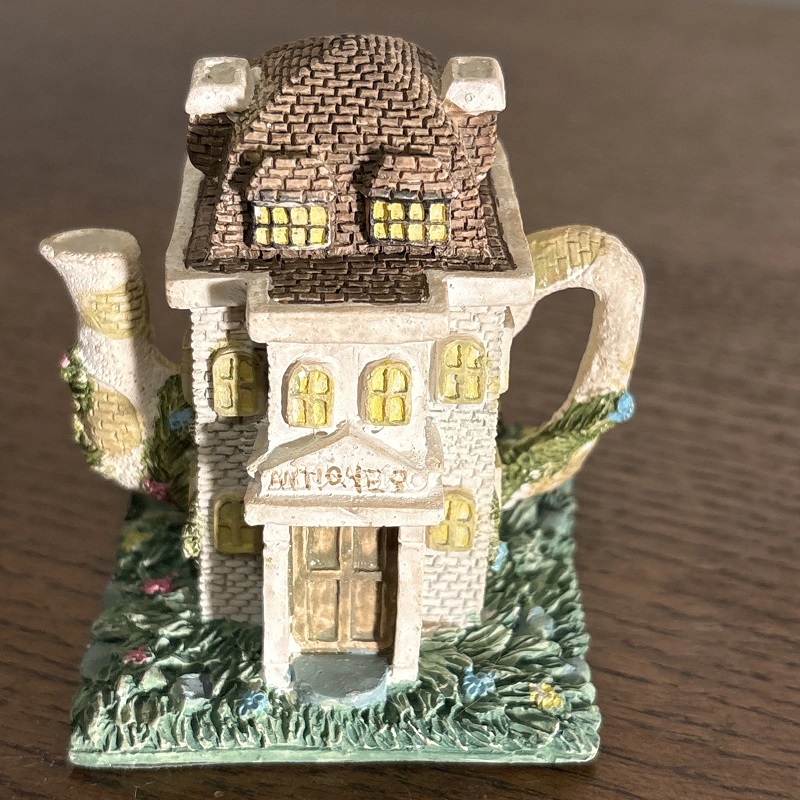
Household objects created in the form of buildings, such as this vintage ceramic teapot
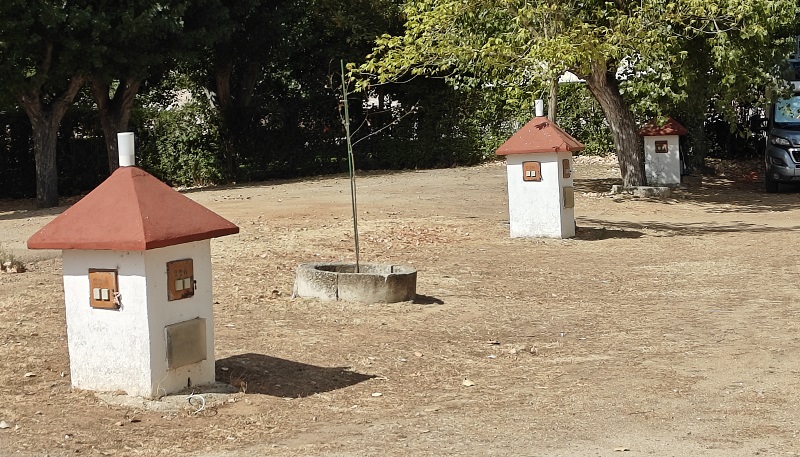
And, weirdly, as functional outdoor utilities
- such as posts for power sockets at a Spanish campsite
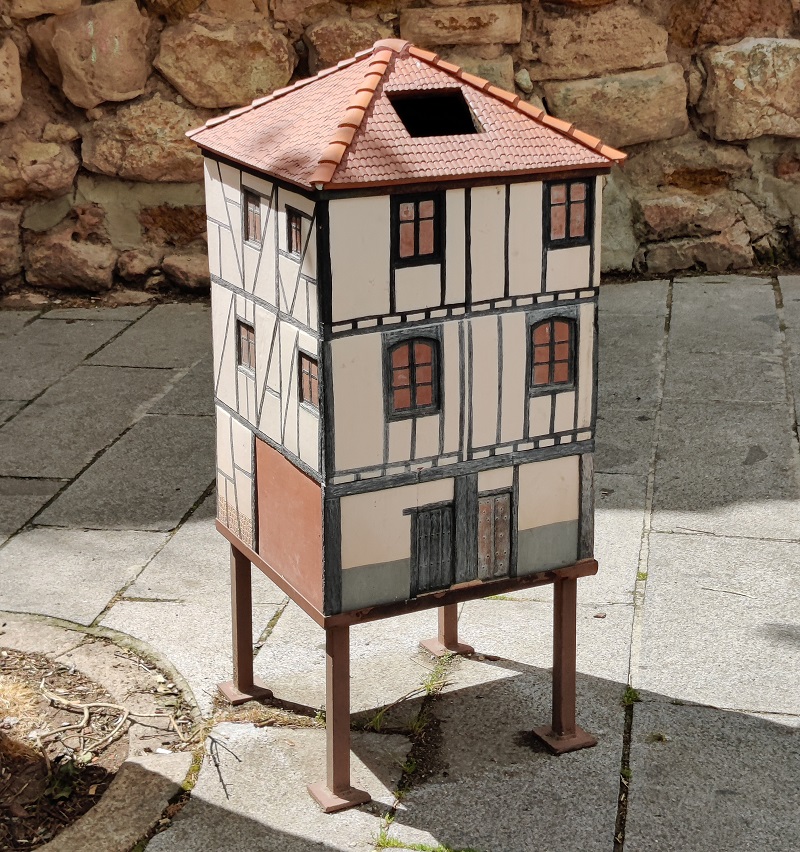
or as town litter bins in Covarrubias
These categories of model generally exist in isolation from one another. Professional architectural or scenic modelling operates quite separately from the amateur hobbyist. Articles on buildings appear in the model railway magazines, the dolls house magazines and the military modelling magazines.
I guess there are journals for resin house collectors
and makers or about souvenir buildings but I have never
personally come across one.
Certainly there are societies and websites for the collector
of souvenir buidings. There
must be trade journals for the professional and film
modeller but they
are kept quiet from mere hobbyists.
There is no apparent crossover between the various genres of miniature building. Though anecdotal evidence from articles, correspondence and shops shows a sub-culture of railway husbands with dolls house wives. Whether they hide in separate rooms to escape from one another or whether they share their hobbies I know not. E-mails to Miniature Buildings at MiniatureBuildingSite@gmail.com are welcome on this and any other subjects.
For me, and I am sure for many others, making, looking at and admiring (sometimes marvelling at)the buildings is the interesting bit. I am happy to leave railway engineering, train operation, dolls clothes, miniature food, tanks and uniforms to others. There will be nothing on Prussian cap badges, GWR liveries or miniature cross stitch. Miniature Buildings will however look at the miniature building trades, construction, joinery, wall finishes, roofing, flooring, wiring, and decoration, designs, techniques and materials. It will look also at architecture and full scale building construction to provide source information and ideas for model buildings. It will feature examples of the model builder's craft (art?) . It will review the range of building products available to you. I hope it will widen your horizons by letting you see what model builders from other disciplines are doing.
Exactly what is covered depends on what you, the interactive reader, call for. If your route to Miniature Buildings is from the world of dolls houses you might like us to extend into furniture building. We might do this occasionaly as this is an area I have dabbled in. If you are a railway modeller you may want us to look at landscape as well as buildings, though this is at the perimeter of my interests.
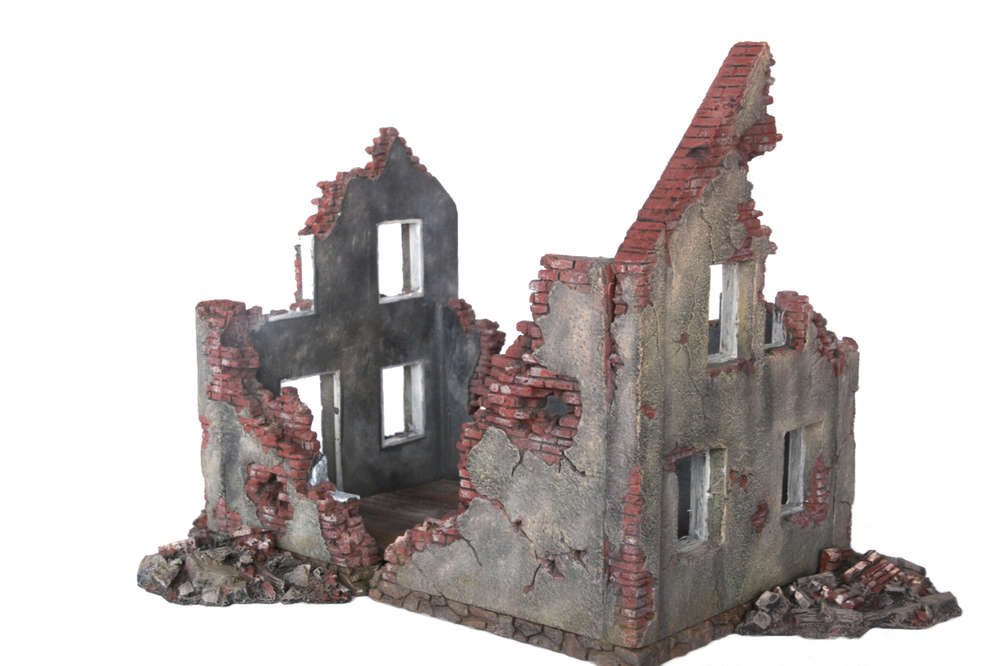
Professional architectural and museum modelling certainly covers a wide spectrum from individual buildings through to whole townscapes. The military modeller may be as concerned with reproducing the destruction of buildings as with creating pristine examples.
We might occasionally look at figures as an aid to the lifelike display of our buildings (though, if we do, we will probably draw on the experience of the military modelling fraternity rather than look to dolls house figures). To quote from an editorial many years ago by Chris Leigh, writing as editor of Model Rail magazine,
"We can and do learn many different techniques from other modelling disciplines. Military modellers are masters of weathering". Railway modellers can teach us lessons about mass production, dolls house makers about architectural detailing, Pendon about perfectionism."
Some Pendon perfection: Duck Stores
My own, maybe fanciful, hope is that our common interests in architecture and its reproduction in miniature can mature into an identifiable and self-contained hobby in which we can produce interesting, attractive and realistic models of buildings for their own sake and our own satisfaction rather than as ancillary to another field of interest . I would hope too for a greater interaction between the professional architectural modeller and the amateur enthusiast. Although these days their models are all CAD images, one rare example used to appear in the site of Canadian architectural practice Hewitt Designs in which Richard Hewitt commented :
"Building the models at HO (1/87 scale) allows us access to the huge assortment of model making materials that are available for model train enthusiasts etc."
Being English my natural leaning is to UK prototypes but I recognise that England is just a damp outcrop perched on the north west corner of Europe and that there is a whole wide world out there. In particular of course there is a vast amount of model architecture produced in the USA and we will try to keep an eye on what the cousins are doing as well.
I hope you will contribute articles, photos, letters and ideas either by mailing Miniature Buildings or, if you are sending photos or samples, email us for details of our address in Tring, Herts (which is in England if you happen to be reading this in the majority of the world).
Miniature Buildings is a free site. It has always been advert free and I'm planning to keep it like that. No subscription is required but if you would like to be on our mailing list so that we can let you know when new content is available for you to read please send an e-mail to: Miniature Buildings.
All the articles and previous blog posts are available through the dropdown menus at the top of each page. Please feel free to explore.
This site was begun in 2019 but I do have to admit that some of the old articles are recycled versions of pieces writen a long time ago for a long lost site called The Miniature Builder which tried to use a magazine format and was aimed more at active modellers. My dreams of becoming a great modeller of buildings (and of running a commercial online magazine or model building shop) have long evaporated. Now I'm just an enthusiast who likes to write.
The Miniature Builder was not a total failure. We were happy to receive lots of e-mails from readers, and reviews in the modelling press, and especially delighted that what we were doing was well received. Despite modesty being a virtue (and pride .....) I still treasure some of the quotes:
" very interesting" ....."it could develop into a wonderful resource"...."good job and looking forward to more" ...."a great online magazine" ...."wonderful idea" ...."an interesting and informative review of scale and sources" ....."a nice blend of pictures, good writing, and good information" ....."the first issue is terrific
One very pleasant surprise was that interest came from all around the world - New Zealand, Australia, Netherlands, Chile, Canada and all over the USA from Florida to Alaska as well as the UK readership I had in mind. Which, I guess, is why it is called the World Wide web.
I hope this new incarnation will please readers as well. But if you think it could be improved please do not hold back from e-mailing Miniature Buildings at MiniatureBuildingSite@gmail.com;and letting me know how.
David Wallis
refreshed September 2025
P.S. Just in case you thought you understood what model making was about, you might consider this abstract of an article entitled "Divergent Thinking in the Construction of Architectural Models " by Kyle W. Talbott ; International Journal of Architectural Computing , Volume 2, Number 2, 1 June 2004, pp. 263-286(24) . I fear the full article is probably beyond my comprehension.
"The article examines one little understood but ubiquitous form of divergent thinking achieved intermittently during the act of drawing or modeling. It is argued that this phenomenon, here called intermittent divergence, is rooted in a special kind of interaction between perception and imagination, and that this interaction has specific experiential requirements. Three requirements are defined. The resulting new theory then provides a framework for the critical analysis of conventional digital modeling and parametric modeling. Conventional modeling methods are shown to satisfy the requirements for intermittent divergence, while parametric modeling methods are shown to undermine them. The article concludes that parametric systems, as currently developed, could inhibit rather than augment this important route to creativity. Additionally, the article questions prevailing beliefs about the computer support of creativity, including the premise that sketching is an ideal creative medium and the premise that ambiguity in graphical depictions is key to the support of creativity. The theory offers an alternative view on these issues."